
How suppliers and manufacturers can reduce their environmental footprint
Sustainability is no longer just a matter of "good PR." It is becoming a standard that influences business relationships, shopping decisions, and customer trust. It is something that should be part of the DNA of every company. Before a company starts taking certain steps and initiating major environmental projects, it should perform an internal analysis - a so-called sustainability audit.
First of all, it is necessary to take a look at:
- energy consumption,
- waste production,
- carbon footprint,
- origin of materials and supply chain.
Simple energy and waste audits or online carbon footprint calculators can be helpful.
Did you know that emissions are typically divided into Scope 1, 2, and 3? In particular, Scope 3 emissions - those arising outside your company - can represent up to 80% of total carbon footprint. This is why it is important to pay attention not only to your own processes, but also to those of your suppliers and customers.
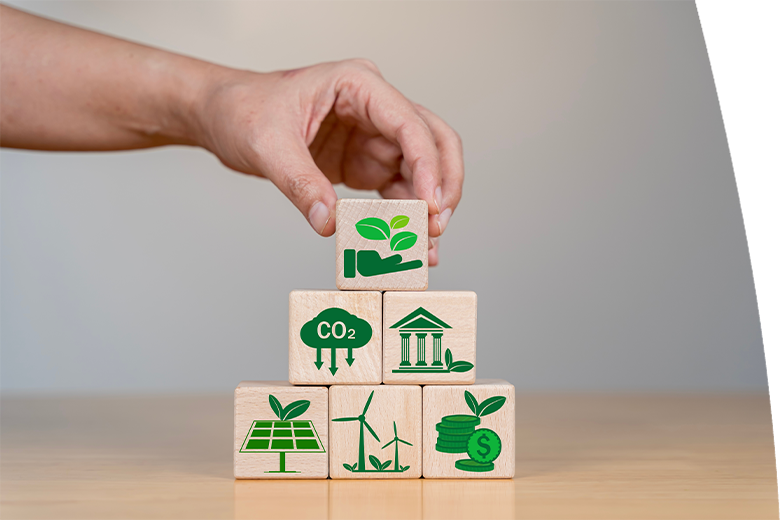
Switch to more eco-friendly energy sources
- Replacing traditional light bulbs with LEDs? Simple and effective.
- Contacting your electric energy supplier to inquire about renewable energy sources? This could be the first step toward a green transition.
- When upgrading your machines, consider their energy consumption - modern solutions save not only the environment, but also finances.
An interesting fact from the real world: up to 95% of an industrial compressor’s environmental footprint is generated during its operation, not manufacturing. Therefore, choosing energy-efficient equipment has a huge impact. Compressors with variable speed drive (VSD) technology can reduce energy consumption by up to 35%.
Reduce waste and increase the use of recycled materials
- Packaging made from recycled paper or plastic is a standard today.
- Waste sorting in the workplace should be a standard practice.
- Think about the products themselves: can their packaging or parts be returned, repaired, or reused?
Companies are more and more often designing products to have a longer lifespan, be easily repairable, and be recyclable in accordance with the principles of the circular economy.

Establish a sustainable supply chain
- Choose eco-friendly suppliers
- Give preference to local sources
- Optimize logistics to reduce transportation
- Choose a more eco-friendly form of transportation (e.g. electric vehicles)
- Exercise pressure on partners to be sustainable (if possible)
Engage and inspire your employees
- Provide education on sustainability (internal newsletters, workshops, site visits, etc.).
- Ideas for saving energy or reducing waste often come directly from production teams.
- Support internal initiatives and motivations (bike-to-work programs, reducing paper use, recycling, internal swap events, etc.).

Be part of sustainable projects
- Support projects and organizations that are already representing a positive impact for the planet.
- Organize activities that contribute to sustainability (e.g. community clean-ups in towns, planting of trees).
Did You Know?
- Compressed air used in manufacturing to power machines and tools can be optimized, and thus reducing CO₂ emissions by tens of tons annually.
- Modernizing outdated equipment reduces not only energy consumption but also maintenance costs and downtime.
- Reducing your carbon footprint increases your competitiveness in tenders where ESG criteria are evaluated.
Interested in more hints like these?
Subscribe to our newsletter and gain practical inspiration on how to make your business more sustainable, efficient, and ready for future challenges.