Slow living and festive decoration: how to create an eco-friendly Christmas atmosphere
The Christmas season is a symbol of joy and closeness. But it is also a time when consumption is unknowingly increased in many companies and businesses and so is their waste production, and energy consumption. Every year, new decorations, plastic ornaments, and light chains are bought and after the holidays, they tend to end up in the trash.
However, the "slow living" concept offers a different perspective, focusing on conscious slowdown, a return to natural materials, and responsible decisions. This approach can also be wonderfully transferred into the world of corporate and professional decoration.
It is not just about ecology, but also about creating a pleasant atmosphere that supports corporate culture, reduces costs, and communicates the values of a brand. Let us take a look at how a "slow" and sustainable Christmas can be introduced in various types of environments—from restaurants to offices and up to industrial facilities.
Natural atmosphere that feels cozy
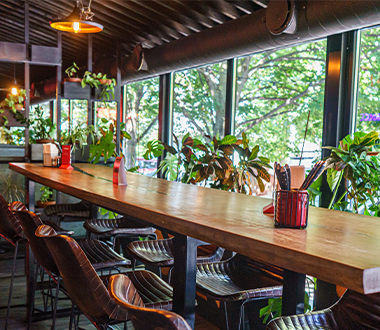
During the pre-Christmas period, hotels, restaurants or cafés function in an intense rush. Guests expect an exceptional atmosphere, but at the same time, they tend to increasingly value authenticity and natural simplicity.
In the sense of slow living, decoration can be based on natural materials—twigs, pinecones, moss, wood, quality napkins, jute twine, and dried fruit make an aesthetically pleasing, scented impression and are environmentally friendly. After the holidays, such decorations can be reused or simply composted.

Less is more - this is the basic rule. Instead of dozens of tiny decorations, choose a few statement pieces - for instance a rustic Advent wreath, handmade candle holders, or a minimalist Christmas tree made from recycled wood.
Involving the staff is also an interesting approach. A short team workshop on creating decorations from natural materials will not only save money, but also strengthen closeness in the team. Guests often appreciate it when they learn that decorations were created by the team of the company and in such cases the decoration also becomes part of the brand's story.
In addition, with LED lighting set on timers, a pleasant warm light can be created that saves energy and adds a peaceful festive atmosphere in the space.
Offices: less plastic, more creativity
In offices, festive decorations are often aimed to transform the space into more cozy and create positive energy among colleagues. This is where slow living can be fully manifested - through minimalism, recycling, and involvement of the team.
Instead of buying new decorations every year, you can use those from the previous season, upgrade them, or swap them between departments. The Christmas tree does not have to be plastic, an increasing number of companies are choosing alternative solutions such as a tree made of wood, cardboard, or even old, redundant office materials (e.g., paper tubes or boards).

Decorating can also be turned into an internal project, for instance, by announcing a competition for the most creative eco-friendly decoration that employees make from recycled materials. This transforms decorating into a team activity with a positive impact on the collective culture.
Also bear energy efficiency in mind: decorative lighting should be energy-efficient, turned on during working hours only. You will save energy while keeping a pleasant atmosphere.
In addition, if you include a small information panel explaining that the decorations are made sustainably, you will not only strengthen internal awareness, but also enhance the brand's image being a responsible employer.
Industry and logistics: functionality and simplicity in eco-friendly spirit
In industrial and logistics operations, festive decoration is often understated - the spaces are large, technical, and not very representative. But even here, it is possible to find a way to combine functionality with sustainability and create a pleasant atmosphere for employees.
Durable materials that will survive several seasons are appropriate. Decorations can be designed in a modular way so that they can be easily dismantled and reassembled. Decorative panels or lighting elements made from recycled materials are practical, safe, and effective.
At the same time, decoration can also be used functionally; LED strips can illuminate roads and paths, navigation routes, or relaxation areas, thus combining aesthetics with safety.

In such an environment, decoration is of symbolic character presenting that the company thinks of its people even if technical premises are concerned. From a psychological point of view, it increases motivation, loyalty, and overall well-being among employees.
Retail and showrooms: sustainability as part of the brand
For commercial premises, decoration is part of their identity. However, more and more customers are sensitive to how a brand addresses ecology. Slow living in retail spaces therefore does not mean less aesthetics, but more meaning.
Instead of plastic garlands and artificial Christmas trees, real materials can be used: wood, recycled paper, linen, canvas, or glass. They make decorations look more luxurious and durable.
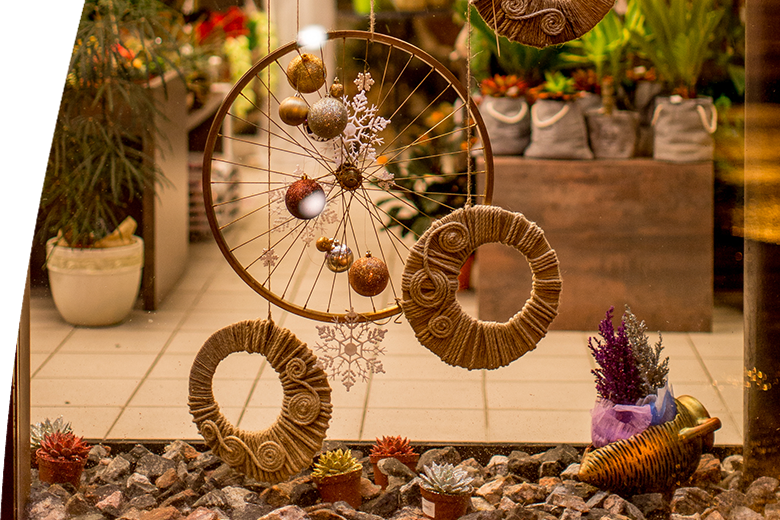
It is a great idea to involve customers, for instance in the form of an interactive challenge where they can decorate a "common" Christmas tree with recycled decorations or write messages about what sustainable Christmas means to them. In this way, the brand can build community and customer experience.
And since decorating is often associated with light, it is worth investing in a smart LED system with low power consumption and installed timer. The effect will remain unchanged, but energy bills are going to be lower.
Slow living during the festive season is not about giving up on Christmas. On the contrary, it is about returning to its true meaning: peace, closeness, and respect for everything that surrounds us.
Whether it is a hotel, office, or industrial park, eco-friendly decoration can be a connection of aesthetics, responsibility, and corporate culture. It shows that the company is thinking about the future, knows how to protect resources, and at the same time it creates an environment where people feel good. Beauty does not have to be single-use, it can be lasting, natural, and come with a story.